

Botox and dermal filler are the two most requested treatments in medical aesthetics, and they are also the two most frequently confused. Botox is a neuromodulator that relaxes the muscle contractions responsible for expression lines, such as crow's feet and forehead creases. Dermal filler is a volumizing gel, typically made from hyaluronic acid, that restores lost structure and fullness in areas like the cheeks, lips, and nasolabial folds. The right choice, for most patients, is not Botox or filler, but Botox and filler, applied strategically to the specific concerns each is designed to correct.
At Ideal Skin MedSpa, our Fort Worth and Decatur teams see this question nearly every day, and the honest answer depends entirely on what your skin is actually doing. Below, we break down how each treatment works, how they differ clinically, and how our injectors determine which approach is right for your anatomy and goals.
What Is the Core Difference Between Botox and Dermal Filler?
Botox addresses motion. Dermal filler addresses volume.
That single distinction explains almost everything else about how, when, and why each treatment is used.
Expression lines, like the vertical lines between the brows or the fine creases around the eyes, form because the underlying muscle contracts the same way thousands of times a day. Botox temporarily blocks the nerve signal to that muscle, softening the movement that creates the line. Volume loss, by contrast, has nothing to do with muscle movement. As collagen and natural fat pads diminish with age, cheeks flatten, lips thin, and the folds around the nose and mouth deepen. Filler replaces that lost structure directly, restoring contour rather than relaxing motion.
This is why a patient can have deep nasolabial folds that barely improve with Botox, or persistent forehead lines that filler cannot soften. Matching the treatment to the underlying cause, not just the location of the concern, is the clinical judgment call that separates a natural-looking result from a disappointing one.
How Does Botox Work?

Example of a neuromodulator treatment, such as Botox, softening expression lines. *Results may vary.
Botox, and neuromodulators like it, work by temporarily blocking the signal between a nerve and the muscle it controls. Without that signal, the targeted muscle relaxes, and the skin above it, which was folding and creasing with every contraction, smooths out.
Results typically become visible within three to seven days and reach full effect by around two weeks. Because the muscle is only temporarily relaxed, rather than permanently altered, the treatment requires maintenance, typically every three to four months, to sustain results. Precise, conservative dosing is essential here. Our injectors are trained to treat the muscle just enough to soften a line without flattening natural expression, which is the difference between a client who looks rested and one who looks “done.”
How Does Dermal Filler Work?
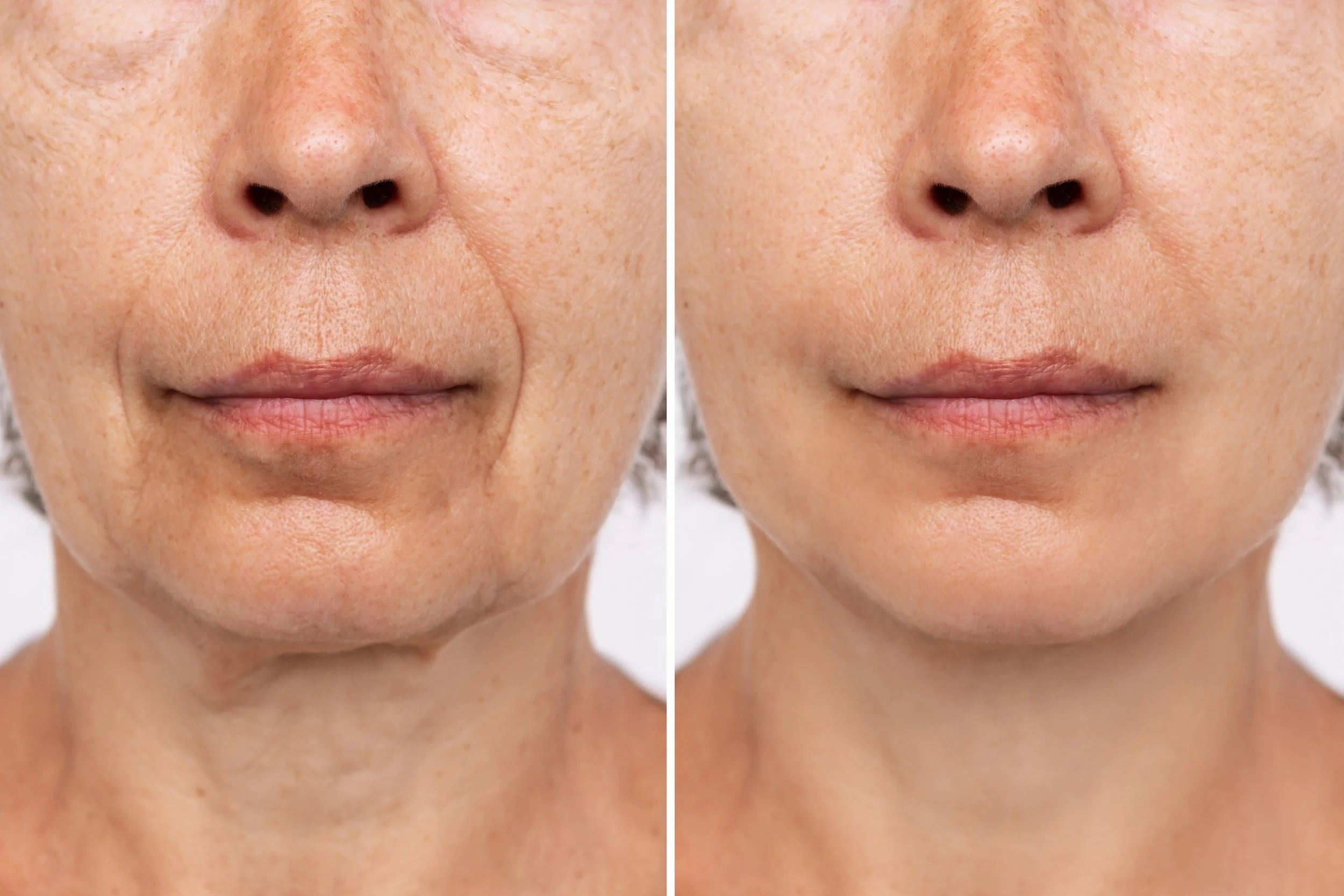
Illustration of dermal filler treatment on the nasolabial folds and marionette lines.
*Individual results may vary.
Dermal fillers used in medical aesthetics are most commonly formulated from hyaluronic acid, a substance your skin already produces naturally to retain moisture and support structure. When injected, the gel adds immediate volume to the treated area and also draws in additional hydration over time, which is part of why many patients notice their skin looking smoother and more supple in the weeks following treatment, not just fuller.
Filler can restore volume in the cheeks, soften nasolabial folds and marionette lines, add structure to thinning lips, and refine the jawline, depending on the formulation and technique used. Because the product itself provides the correction, rather than altering muscle activity, filler results are visible immediately, with any mild swelling resolving within a few days.
Can You Combine Botox and Filler?
Yes, and for many patients in their thirties, forties, and beyond, combining the two treatments produces a more balanced, natural-looking result than either one alone. A patient with both deepening forehead lines and flattened cheeks, for example, may need Botox to address the muscle-driven lines and filler to restore the volume loss separately causing midface hollowing. Treating only one concern while ignoring the other often leaves patients wondering why they “still look tired” despite a successful treatment.
Our injectors evaluate your face as a whole system during a consultation, rather than treating isolated lines in a vacuum, which is how we determine whether Botox, filler, or a combination of both will get you to your actual goal.
Quick Comparison: Botox vs. Filler at a Glance
What it treats: Botox treats dynamic, movement-based lines (forehead lines, crow's feet, between the brows). Filler treats static volume loss (hollow cheeks, thin lips, nasolabial folds, marionette lines).
How it works: Botox temporarily relaxes targeted muscles. Filler adds and restores physical volume with a hyaluronic acid gel.
When results appear: Botox develops over three to seven days. Filler results are visible immediately.
How long results last: Botox typically lasts three to four months. Filler typically lasts six months to two years, depending on the product and treatment area.
Best for: Botox is best for expression lines caused by repeated muscle movement. Filler is best for volume loss, contour changes, and structural softening.
How Long Do Results From Each Treatment Last?
Botox is temporary by design, and most patients find that results soften gradually around the three-month mark, with a full return of movement by four months without a follow-up treatment. Many patients schedule their appointments on a recurring basis, roughly every three to four months, to maintain consistent results year-round.
Filler longevity varies more widely depending on the product used, the treatment area, and individual metabolism. Lip filler, in an area with constant movement, tends to break down faster, often within six to nine months. Cheek and midface filler, in areas with less movement, can last twelve to eighteen months or longer. Your injector will walk you through realistic timelines for your specific treatment plan during your consultation.
How Do You Know Which Treatment Is Right for You?
The most reliable way to know is a hands-on consultation, not a mirror. Two patients with what looks like “the same” nasolabial fold may need entirely different treatment plans, one because of volume loss and the other because of skin laxity that neither Botox nor filler can fully correct alone.
During your consultation, our injectors will assess whether a concern is driven by muscle movement, volume loss, skin quality, or some combination of all three, and build a treatment plan around that assessment rather than a generic protocol. This is also when we will discuss realistic expectations, since the goal at Ideal Skin MedSpa is always a refreshed, natural result, never an overdone one.
Skin quality itself also factors into the decision. Thin, sun-damaged, or poorly hydrated skin can make volume loss look more pronounced and expression lines look deeper than they would on well-maintained skin, which is one reason our injectors often pair a treatment plan with recommendations for medical-grade skincare or complementary treatments like microneedling or an IPL photofacial, rather than treating the injectable concern in isolation.
What Happens During a Botox or Filler Consultation at Ideal Skin MedSpa?
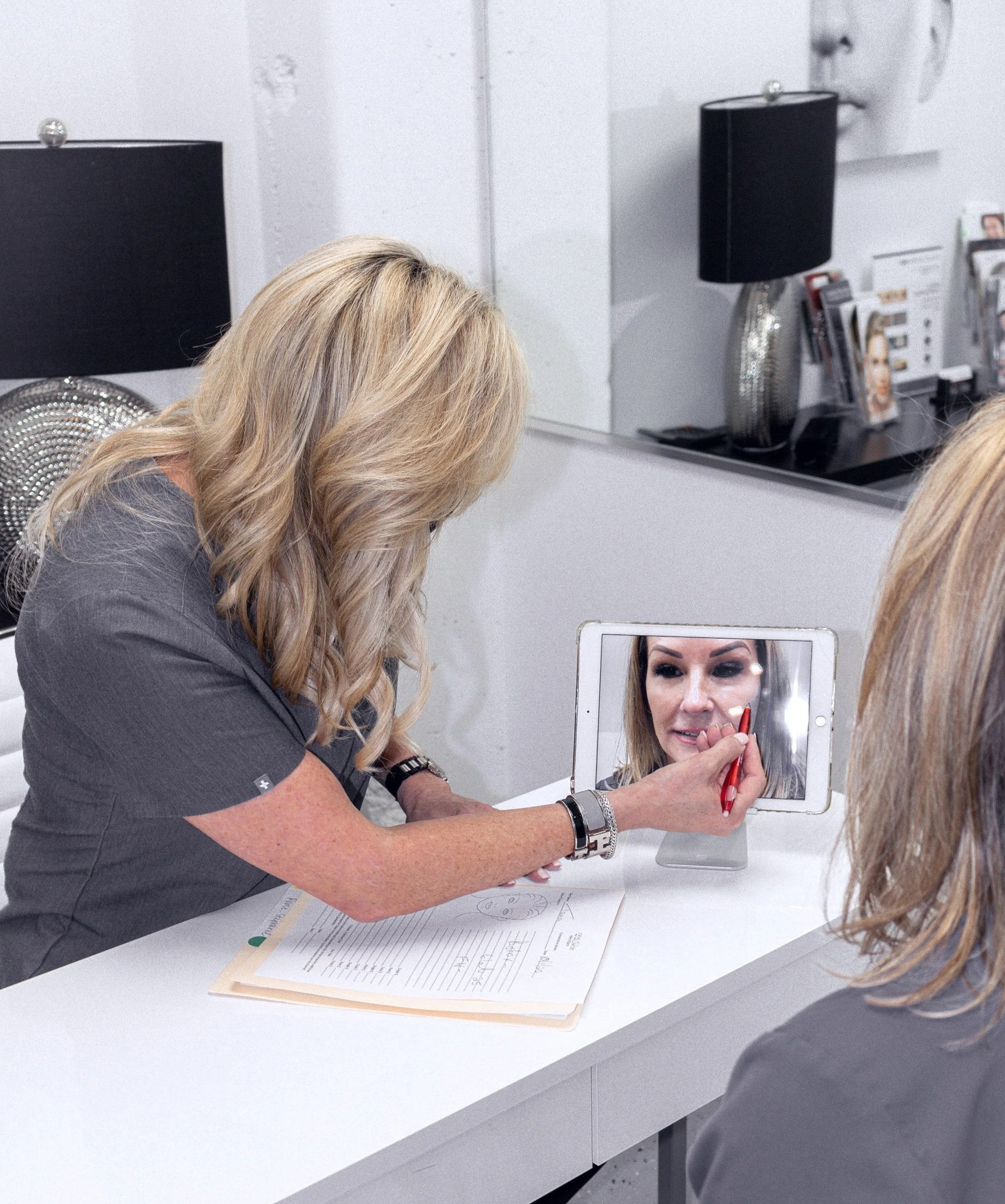
Every treatment at Ideal Skin MedSpa begins with a consultation, not a quick injection. Your injector will review your medical history, discuss your goals in your own words, and examine your face at rest and in motion to see exactly how your muscles and tissue behave, since a line that looks dramatic when you are animated may barely show at rest, and vice versa.
From there, we build a specific, written treatment plan, including which product is recommended, how much, and why, so you understand the reasoning behind the recommendation rather than simply trusting that it is correct. Pharmaceutical-grade products are used throughout, and your injector will walk you through aftercare instructions and a realistic timeline for results before you leave. If a combination approach, or a staged plan across multiple visits, makes more sense than treating everything at once, we will say so directly, even when it means a smaller appointment today.
Why Does Injector Experience Matter More Than the Product Itself?
Botox and dermal filler are both, technically, commodity products. The meaningful variable is not the brand of neuromodulator or the specific filler formulation, but the skill, training, and judgment of the person placing it. Precision in a Botox treatment means understanding facial anatomy well enough to avoid affecting muscles you did not intend to treat. Precision in filler means understanding exactly how a product will integrate with existing tissue, move with the face over time, and respect the vascular anatomy beneath the skin, not just where to inject it today.
Our team brings 30 years of combined clinical experience to every treatment plan, with continued training in the latest injection techniques and pharmaceutical-grade products used throughout. That expertise is what allows us to treat conservatively, adjust in real time, recognize and manage rare complications quickly should they arise, and deliver results that look like you, simply refreshed.
Frequently Asked Questions
Is Botox or filler more painful?
Both treatments involve a brief, well-tolerated pinch at each injection site, and most patients describe the discomfort as minimal. Filler formulations typically include a numbing agent to improve comfort, and topical numbing is available for both treatments on request.
Can I get Botox and filler on the same day?
Yes. Many patients receive both treatments in a single visit, since they target different concerns and do not interfere with one another. Your injector will sequence the treatment plan for your comfort and the best possible result.
How soon will I see results?
Filler results are visible immediately, with any minor swelling resolving within a few days. Botox results develop gradually over three to seven days, with full effect visible by around two weeks.
Is there downtime after Botox or filler?
Most patients return to normal activities the same day. Mild redness, swelling, or bruising at the injection site is possible with either treatment and typically resolves within a few days.
How do I know how much product I need?
This is determined during your consultation based on your anatomy and goals, not a fixed formula. Our injectors will recommend a conservative starting plan and adjust at your follow-up visit as needed.
Ready to Find Out Which Treatment Fits Your Goals?
If you have been debating Botox versus filler, the answer is rarely one-size-fits-all, and a consultation with an experienced injector is the only way to know for certain. This December, Ideal Skin MedSpa is offering $9.99 Botox per unit and a buy two syringes, get one free filler special at both our Fort Worth and Decatur locations, making it a great time to start, or refine, your treatment plan with our team.
Individual results may vary based on anatomy, skin condition, and treatment history. Schedule a consultation with our team to discuss what is right for you.